
The spinning wheel, the bouncing ball, the collective breath held as fortunes hang in the balance – roulette embodies the intoxicating dance between chance and destiny. Imagine if the seemingly random could be tamed, if the chaotic spin could yield to the power of prediction. This tantalizing prospect has fueled countless theories and strategies, transforming the casino game into a playground for scientific exploration.
Can the scientific methods crack the code of roulette, transforming a game of pure luck into one of calculated probability? The debate rages on, with proponents wielding complex equations and sophisticated technologies. The allure of predicting roulette lies in the idea of mastering the unpredictable, of turning the tables on the house. People have explored tools and strategies, from basic probabilities to the most elevated technology to predict where the ball will land. Each method provides its own perspective on the game.
The Science of Roulette
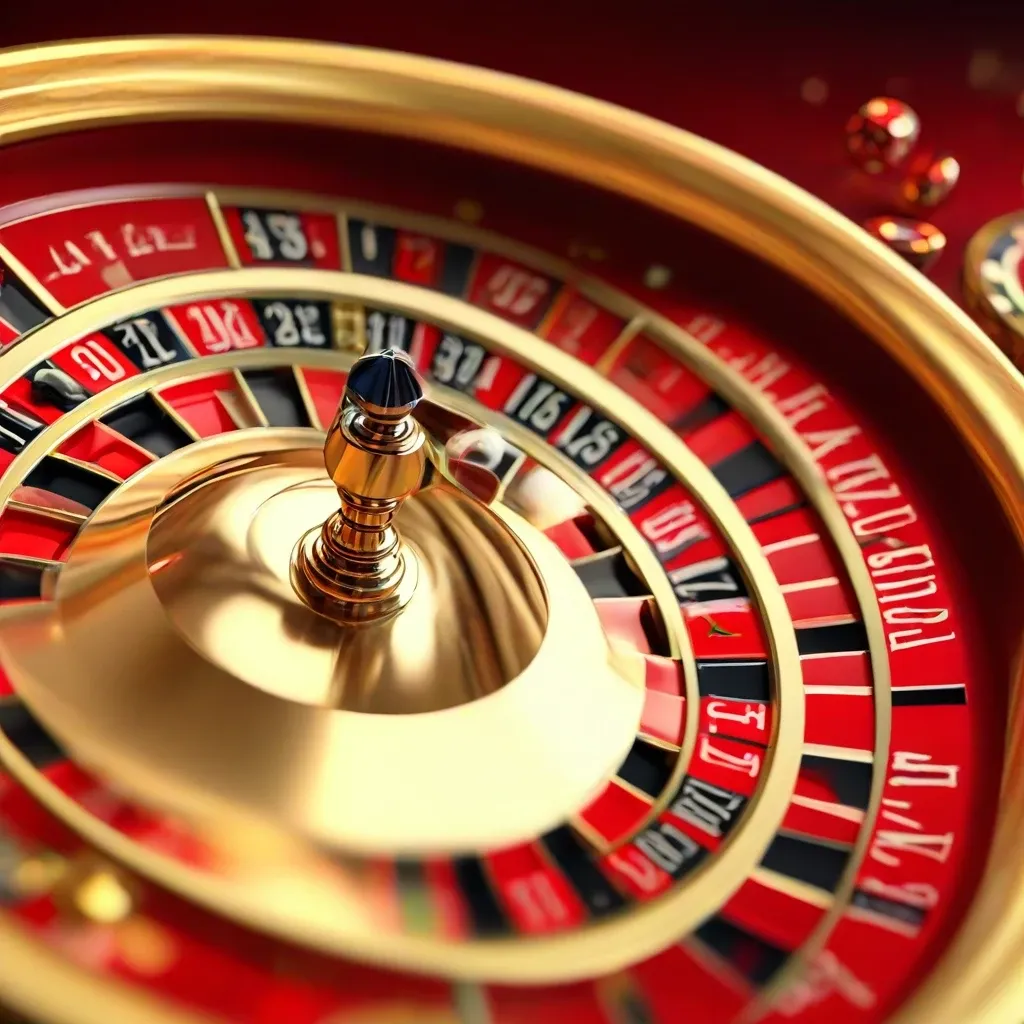
The allure of roulette lies in its perceived randomness, the captivating dance of a small ball against the spinning backdrop of fate. However, beneath the veneer of chance lies a world governed by the precise laws of physics. A roulette wheel, meticulously engineered, comprises a rotating disk divided into numbered pockets, ranging from 0 to 36 (and sometimes including a 00). These pockets alternate in color, typically red and black, adding to the visual spectacle. The wheel itself is carefully balanced to minimize any inherent bias, ensuring a fair game, at least in theory.
The mechanics are straightforward: a croupier sets the wheel in motion and releases a small ball onto the track along the wheel’s outer rim. As the wheel spins, the ball gradually loses momentum, eventually descending towards the numbered pockets. The final resting place of the ball dictates the winning number. While the sequence appears chaotic, each spin is a product of deterministic physics. The initial conditions – the ball’s velocity, the wheel’s speed, the angle of release – all contribute to the trajectory. In principle, complete knowledge of these initial conditions would allow for the prediction of the outcome.
However, achieving such accuracy in practice is incredibly difficult. Minute variations in these parameters, imperfections in the wheel, and even slight air currents can all influence the ball’s path. This inherent sensitivity to initial conditions is what gives roulette its element of unpredictability, even though it operates under the umbrella of classical mechanics.
Debunking Common Roulette Myths
The belief that past outcomes influence future spins is a persistent misconception known as the gambler’s fallacy. Just because the ball has landed on red several times in a row does not increase the odds of it landing on black on the next spin. Each spin is an independent event, governed solely by the physical parameters at that moment. The wheel has no memory of previous results.
Similarly, the concepts of “hot” and “cold” numbers are fallacies. Players often track results, believing that certain numbers are “due” to hit or have a higher probability of appearing. Statistically, over a large number of spins, each number should appear roughly the same number of times, reflecting the equal probability assigned to each pocket. Short-term variations are expected, but they do not indicate any inherent bias or predictive power.
Understanding the independence of each spin is crucial for responsible roulette play. Probability remains constant. The odds reset with every turn of the wheel.
Factors to Consider in Roulette Predictions
Predicting the outcome of a roulette spin is a pursuit that has captivated gamblers and mathematicians for generations. While the game is fundamentally based on chance, certain factors can subtly influence the trajectory of the ball and the wheel, potentially offering a slight edge to those who understand them. These factors, however minute, can tip the scales ever so slightly.
One critical aspect is wheel tilt. Even the slightest imperfection or unevenness in the wheel’s surface can introduce bias, causing certain numbers or sections to become more frequent landing spots. Detecting this requires meticulous observation and, ideally, sophisticated measurement tools. Then there’s ball velocity. The speed at which the ball is released significantly impacts its trajectory and the number of revolutions it makes before settling into a pocket. Experienced players often try to gauge this velocity to narrow down the potential landing zone.
Similarly, wheel speed plays a crucial role. A faster-spinning wheel results in a different distribution of outcomes compared to a slower one. Combining these two speed factors, is the foundation of the ‘visual ballistics’ approach where gamblers estimate where the ball will fall looking at the speed of both elements. But there’s more to it.
Other less obvious elements, such as air resistance and friction, introduces a layer of complexity and are not easy to measure. Air resistance can subtly alter the ball’s path, especially over longer distances. Friction between the ball and the wheel’s surface gradually slows the ball down, affecting its final descent.
Experimenting with these factors can be incredibly challenging. I recall spending hours in a casino, discreetly observing a particular roulette wheel. I meticulously recorded ball velocities, wheel speeds, and any visible signs of wheel tilt. The sheer volume of data was overwhelming and It took a while to create something useful. Even after weeks of analysis, the results were far from conclusive. The inherent randomness of the game always seemed to outweigh any predictive advantage I could gain. This is the ultimate challenge as it is necessary to have a system that accounts for all these factors.
Mathematical Models and Algorithms
Behind many roulette prediction strategies lie sophisticated mathematical models and algorithms. These tools attempt to quantify the various factors influencing a spin and generate probabilistic predictions. But how to achieve it?
The core of any wheel-prediction is based of mathematical model of the moment of inertia, friction and speed variables. Imagine tracking the ball and wheel’s movements and inputting these values into equations that estimate the ball’s deceleration rate and the point where it’s likely to fall. For example, one might use a differential equation to model the ball’s deceleration, incorporating factors like air resistance and friction. The solution to this equation can then predict the ball’s position at a future time.
Here’s a simplified example of how an algorithm might work:
- Data Collection: Gather data on wheel speed (ω), ball speed (v), and ball position (θ) at regular intervals.
- Parameter Estimation: Estimate parameters like friction coefficient (μ) and air resistance coefficient (k) using historical data.
- Prediction: Use the collected data and estimated parameters to predict the ball’s landing position. This can be done using equations of motion that incorporate the effects of friction and air resistance.
These equations get complex fast. It is up to the player to choose what factors matter the most to analyze.
Technologies Used in Roulette Predictions
Advanced technologies play a pivotal role in attempting to predict roulette outcomes. These technologies meticulously gather data on various parameters like wheel speed and ball velocity. Laser scanners, accelerometers, and sophisticated computer vision techniques are at the forefront of this endeavor.
Laser scanners precisely measure the speed and trajectory of the roulette wheel. They emit laser beams that reflect off the wheel’s surface, and the variations in these reflections are analyzed to determine the wheel’s rotational speed and any subtle irregularities. Accelerometers, on the other hand, are used to detect the slightest changes in the wheel’s movement, providing data that can be used to refine predictions.
Computer vision systems employ cameras and image processing algorithms to track the ball’s movement in real-time. These systems analyze the ball’s speed, trajectory, and bouncing patterns to estimate its landing position. Neural networks, a form of artificial intelligence, are often used to process the vast amounts of data generated by these technologies. These networks are trained to identify patterns and correlations that might be missed by human observers, further refining the accuracy of predictions. Prediction software then uses the processed data to generate probable outcomes, leveraging complex algorithms to assess the likelihood of the ball landing on specific numbers or sections of the wheel.
The Limitations of Predictive Technology
Despite advancements, predictive technology in roulette faces significant challenges. Casinos employ various countermeasures to thwart such attempts. These include modifying wheel designs to introduce more randomness, altering environmental conditions to affect ball behavior, and actively monitoring players for suspicious activity such as the use of electronic devices.
Furthermore, the inherent unpredictability of a physical system makes perfect prediction impossible. Edge sorting and similar techniques sometimes yield initial promise but can be quickly detected and neutralized by casinos. Even sophisticated systems are prone to errors due to unforeseen variables such as slight imperfections on the wheel, variations in ball shape, air resistance, and tiny shifts in the table’s level. When these systems fail, users risk significant financial losses and potential legal issues, underscoring the risks associated with relying on technology to beat the roulette wheel.

Ethical and Legal Considerations
The use of predictive methods in casinos, particularly in games like roulette, raises significant ethical and legal questions. The legality of employing such techniques is often vague and varies considerably depending on the specific jurisdiction. While casinos operate under strict gaming regulations designed to ensure fair play, the line between skillful play and illegal cheating can become blurred when predictive technology is involved. From a legal standpoint, if a predictive method relies on manipulating the roulette wheel or employing external devices without the casino’s knowledge, it is almost certainly illegal.
However, if a player uses only their observation skills and mental calculations, the legal stance is less clear. Some argue that casinos have a right to protect their profits and that any attempt to gain an unfair advantage, regardless of the method, is unethical. Others argue that players are entitled to use their intelligence and skills to try and beat the house. The core ethical debate revolves around fairness: does predicting roulette violate the spirit of the game, which assumes a level playing field based on chance? Casino regulations are in place to prevent cheating, ensure games are honest, and protect the integrity of the gaming industry. These regulations address many forms of cheating, but the unique nature of predictive methods often requires a case-by-case evaluation. Legal consequences for attempting to cheat in a casino can include hefty fines, arrest, and a ban from all casinos.
Stories of Successful (and Unsuccessful) Attempts
The history of roulette is dotted with stories of individuals and teams attempting to crack the code of the spinning wheel. Some accounts claim successful short-term gains using sophisticated observation techniques; for example, by clocking the speed of the wheel and the ball to make short term predictions. However, these wins are often followed by increased scrutiny from casino staff, and in some cases, outright bans. Other stories recount more ambitious, but ultimately unsuccessful, attempts to use technology to predict outcomes.
Consider the case of a group who tried to use a concealed computer to calculate the trajectory of the ball. Their efforts were thwarted when casino security noticed suspicious behavior. The risks associated with attempting to predict roulette are substantial. Even if initial attempts are successful, casinos are adept at detecting and neutralizing such tactics. Ultimately, the allure of predicting roulette is strong, but the risks of detection and severe consequences make it a dangerous game.
Conclusion
While the allure of predicting roulette outcomes persists, remember that pure chance significantly impacts each spin. However, the application of scientific methods, particularly statistics and probability, can offer a slight edge. By meticulously analyzing wheel imperfections, tracking results, and adjusting betting strategies based on observed patterns, some individuals have managed to tilt the odds ever so slightly in their favor.
The techniques and analyses discussed stem from experience in applying analytical approaches to games of chance. It is important to consider that no method can guarantee winnings in roulette. The inherent randomness of the game, combined with casino safeguards, makes definitive prediction nearly impossible. Approach roulette with a realistic understanding of both its potential and its limitations. Knowledge is power, but in roulette, it’s a power that must be wielded with caution and an acceptance of the risks involved.